-
Unlikable
So I am pleased that you find «Ti con zero» “likable”; but the more unlikable a book is (that is, hard to take in, because of our habits of thought and our tastes) the more it counts; the more laborious it is to take in, the more it counts I. Calvino, The Written World, 64
-

Frank’s
I stop here every year for gas, tacos, and supplies. I often spend a night in town. When I do, it’s always a burger and slice of pie at Ray’s. This time I spent a few hours wandering around town. I passed two older women sitting in their yard, with a friendly but yappy little dog. I chatted with them while I played with the dog. I wandered past abandoned houses, closed hotels, and a…
-
Business is slow
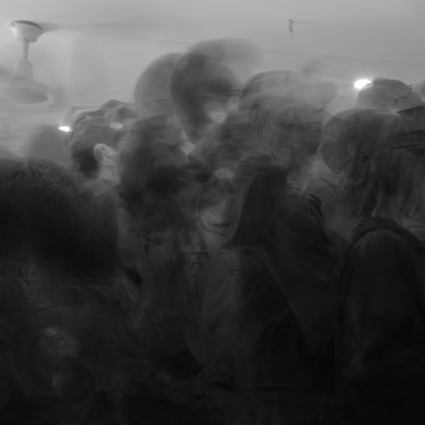
Seven women sit in the cafe. I’m the eighth person. Aside from the worker’s voice that carries, the room is quiet. One woman is writing something, her pen poised above a pad of paper. One woman reads a book. Two are working on class assignments — like most students, “work” seems to mean announce that they have assignments to finish, and then to talk to each other about non-assignment issues (e.g., “I’m looking for an…
-
Seen in a Café
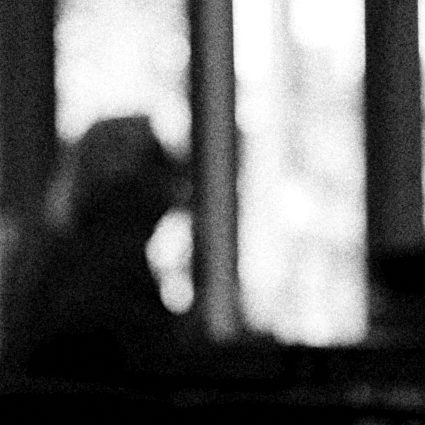
The old guy is asking questions, offering suggestions, and taking notes. He’s there with a young couple, planning the music for the couple’s wedding. At first glance he looks like the leader of some cover band, but he’s probably DJ. A full head of lovely silver hair, he is in his mid-60s and easily twice the age of the couple. She does most of the talking. Her fiancé sits quietly, nodding his support when she…
-
The Loss of Idleness
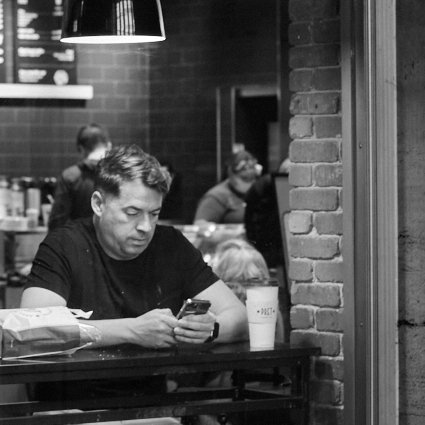
I don’t know quite how to begin. These ideas are just beginning to take shape. Maybe I can start simply, by describing what concerns me, what seems, at least to me, to be a problem. The other day, while stopped at a traffic light, the two people in the car next to me were both consumed by their phones; behind them on the corner a pedestrian stared at his phone as he leaned on the…
-
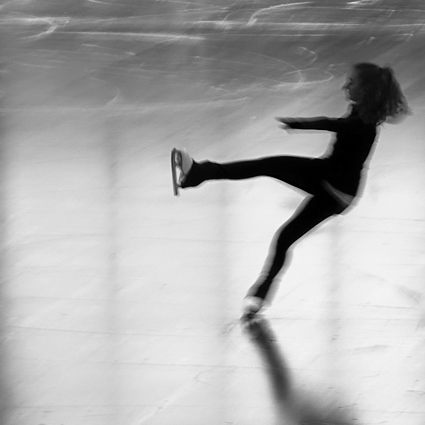
Creativity Needs No Audience
I envy Vivian Maier. Not because I like her work — I have seen too few of her photos to know what I think of them, though I doubt they would appeal much to me. No. I envy Vivian Maier because she seems not to have cared whether or not I liked her work, or had any ideas about it one way or another. She seems not to have given a single thought to any audience.…
-
Of Travel Books and Photographs
Travel books are a useful, modest and yet self-contained way of writing literature. These are books that have a practical use, even though, or precisely because, countries change from year to year and in fixing them as you have seen them you record their changing essence; and in such books you can express something that goes beyond the description of places one has seen, a relationship between yourself and reality, a process of knowledge. I.…
-
Asocial Media
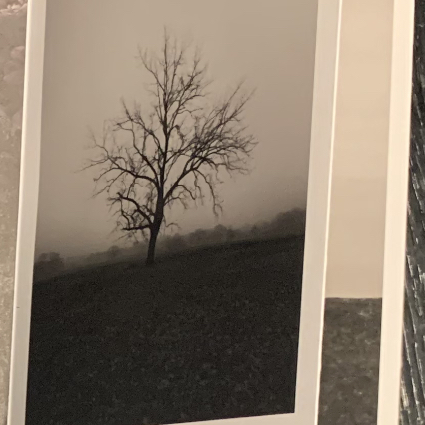
I make things and leave them places (a Little Free Library or a local coffee shop or a local French bakery or stashed amongst the books at a local bookstore) for other people to find. I don’t know what happens after that. It adds a sense of mystery and intrigue. I create things I need to create. I guess in some sense I make things for somebody else, though not for some specific somebody else.…
-
Fragments and Traces
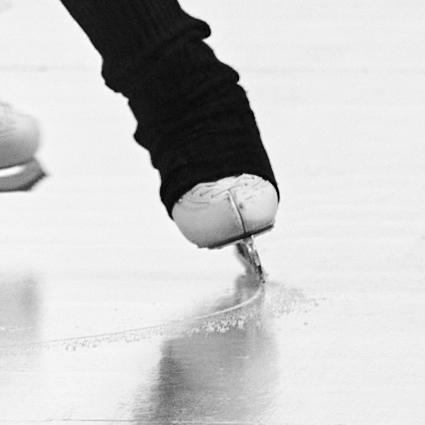
That a photograph must tell a story is commonplace. “Storytelling” has conquered every form of photography, from landscape to street photography to elaborately staged scenes. I prefer to see photographs as fragments, extraits from a now lost present. John Berger remarked on the gap between the moment photographed and the present, saying All photographs are of the past, and yet in them an instant of the past is arrested so that, unlike a lived past,…
-
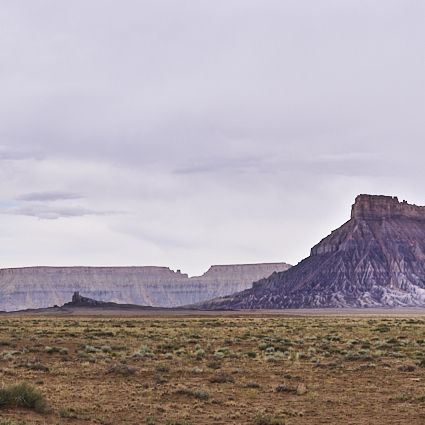
Mirror, Window, or Smoke-Fogged Glass?
I wonder how much of the vogue for photographs to express some deeper meaning relates to Szarkowski’s mirror-window dichotomy? It seems to me there is a strong preference of late for a rather blunt or simplistic version of the mirror side of the dichotomy, echoed in the oft repeated disdain for “merely aesthetic” or “calendar” photos (I’ve mused about this before). Photographs that hint at the inner, psychological states of the photographer garner praise and…